
How to Use Sports Science to Improve Athlete Training
Quick summary
Sports science improves athlete training by turning workload, recovery and performance data into decisions. Coaches can use it to individualise sessions, identify unusual changes and evaluate whether a program is producing the intended response. The goal is not to follow one score. It is to combine reliable data with athlete feedback and coaching judgement.
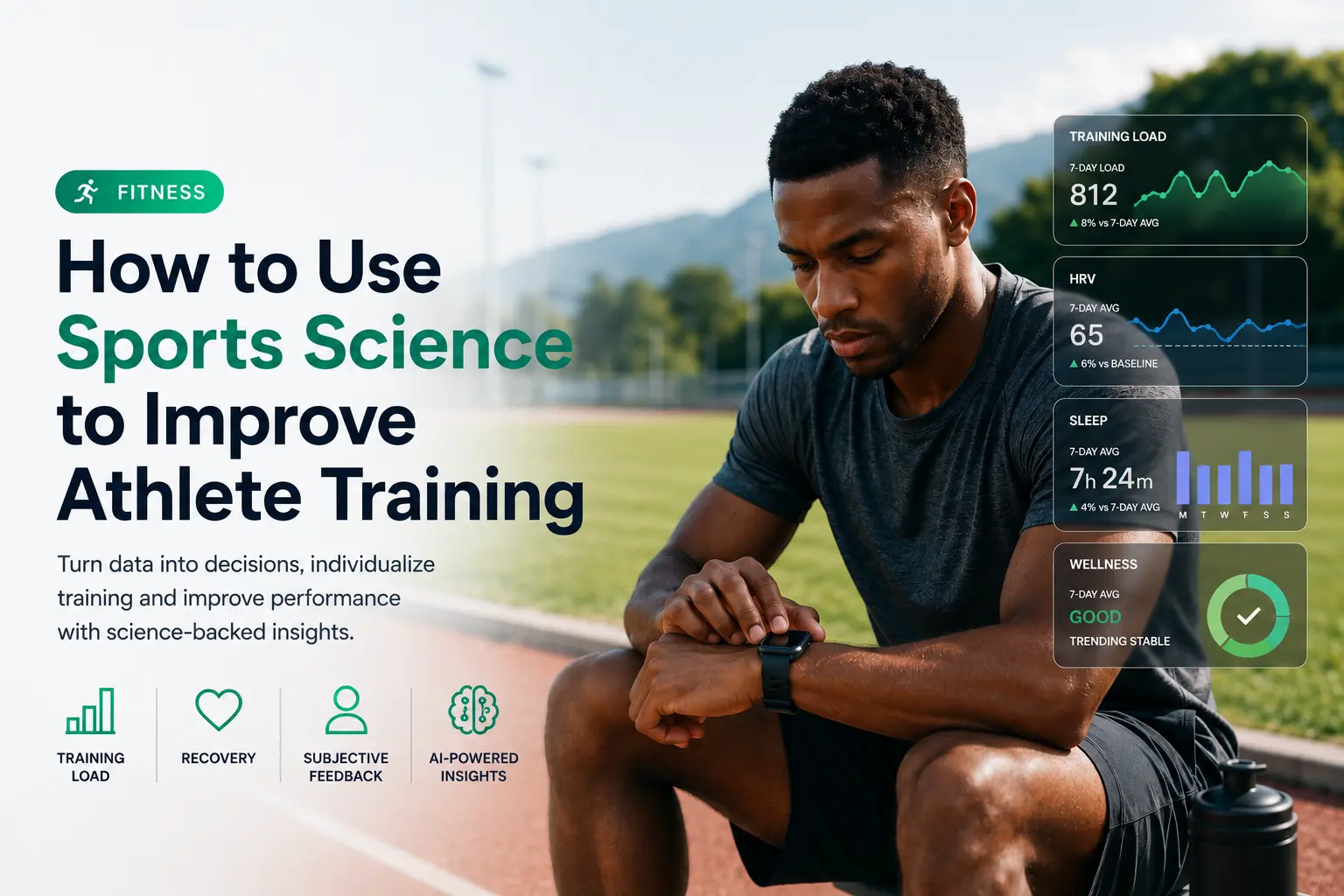
Start with the decision, not the data
Collecting more athlete data does not automatically lead to a better training program. A useful sports science process starts with a specific decision.
A coach may need to decide whether to increase the next conditioning session. A performance director might want to find athletes who are accumulating fatigue.
Each question requires different inputs. The International Olympic Committee consensus statement on load in sport distinguishes between external load, which is the work an athlete completes, and internal load, which is the athlete's physical or psychological response. Distance and power describe the work. Heart rate, session rating of perceived exertion and recovery trends help show how that work affected the athlete.
Start by defining the decision. Select the smallest set of metrics that can add context, compare each athlete with their own normal range and review the findings with the athlete.
Build an athlete monitoring framework
A useful athlete monitoring framework connects the work an athlete completes with how their body responds. It should help coaches understand whether training is producing the intended adaptation or creating fatigue that may require attention.
Start with three areas:
- Training load - Track the amount and intensity of work completed. Depending on the sport, this may include duration, distance, power, heart rate zones or session RPE.
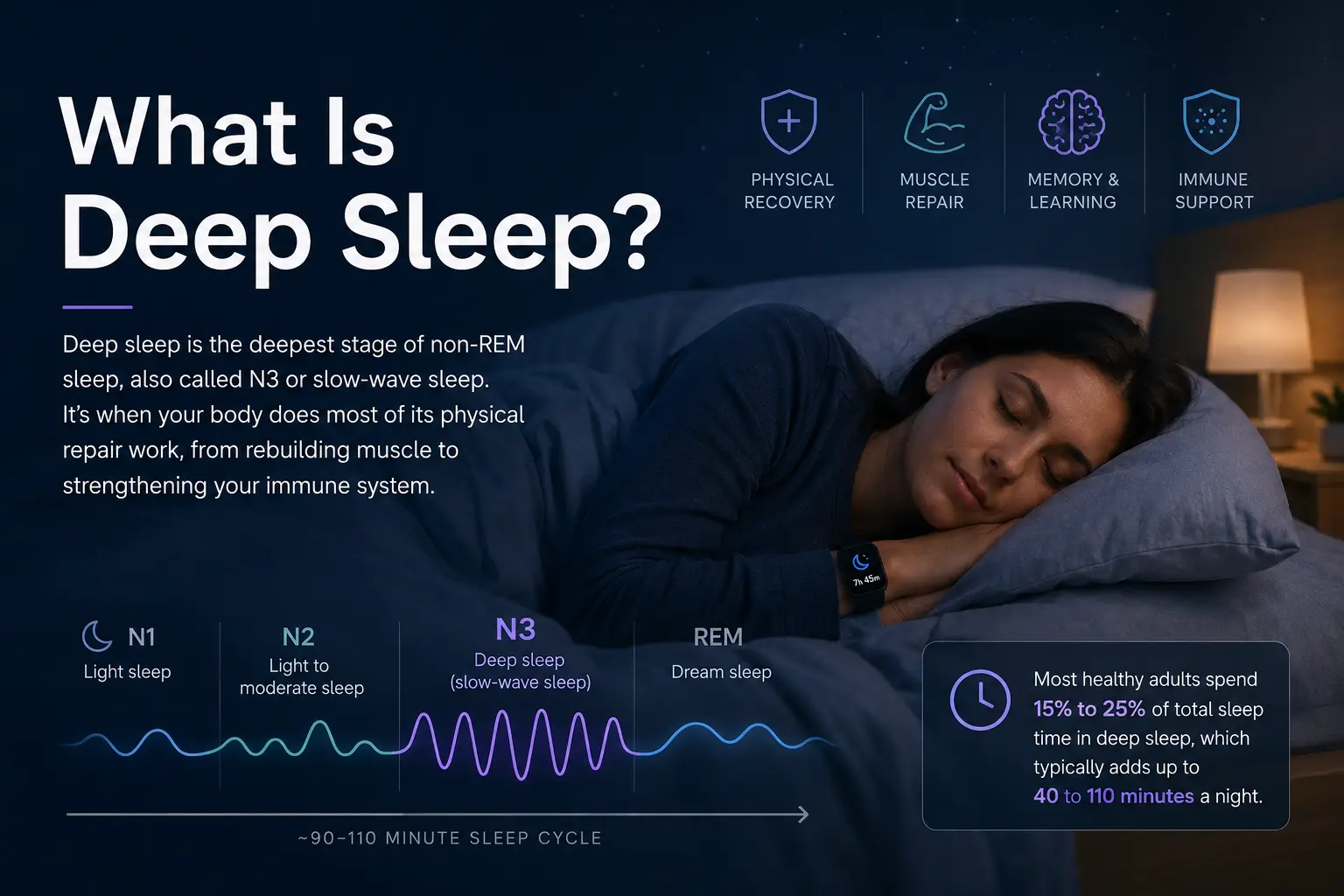
- Recovery - Review changes in sleep, HRV, resting heart rate and other recovery measures against the athlete's normal baseline.
- Subjective feedback - Ask athletes about soreness, fatigue, stress and mood. These responses can provide context that a wearable or performance test cannot capture.
A review in the British Journal of Sports Medicine found that subjective measures often reflected changes in athlete wellbeing more sensitively and consistently than the objective measures included in the review.
These data points should be reviewed together. A lower HRV reading may mean little on its own. If it occurs alongside declining sleep, greater soreness and a recent increase in training load, it becomes a pattern worth discussing with the athlete.
For a deeper look at the measures behind this framework, see this guide to athlete monitoring.
Compare athletes with their own baselines
Team averages can hide meaningful differences. Two athletes may complete the same session and show very different internal responses.
Avoid reacting to one isolated value. HRV can change with sleep, illness, psychological stress and measurement conditions. Review trends under consistent conditions and compare them with the athlete's usual variation.
A recent article in Sports Medicine on monitoring training effects also stresses that readiness is context dependent and distinct from training load itself. Abnormal responses should be checked for data collection errors before staff alter a program.
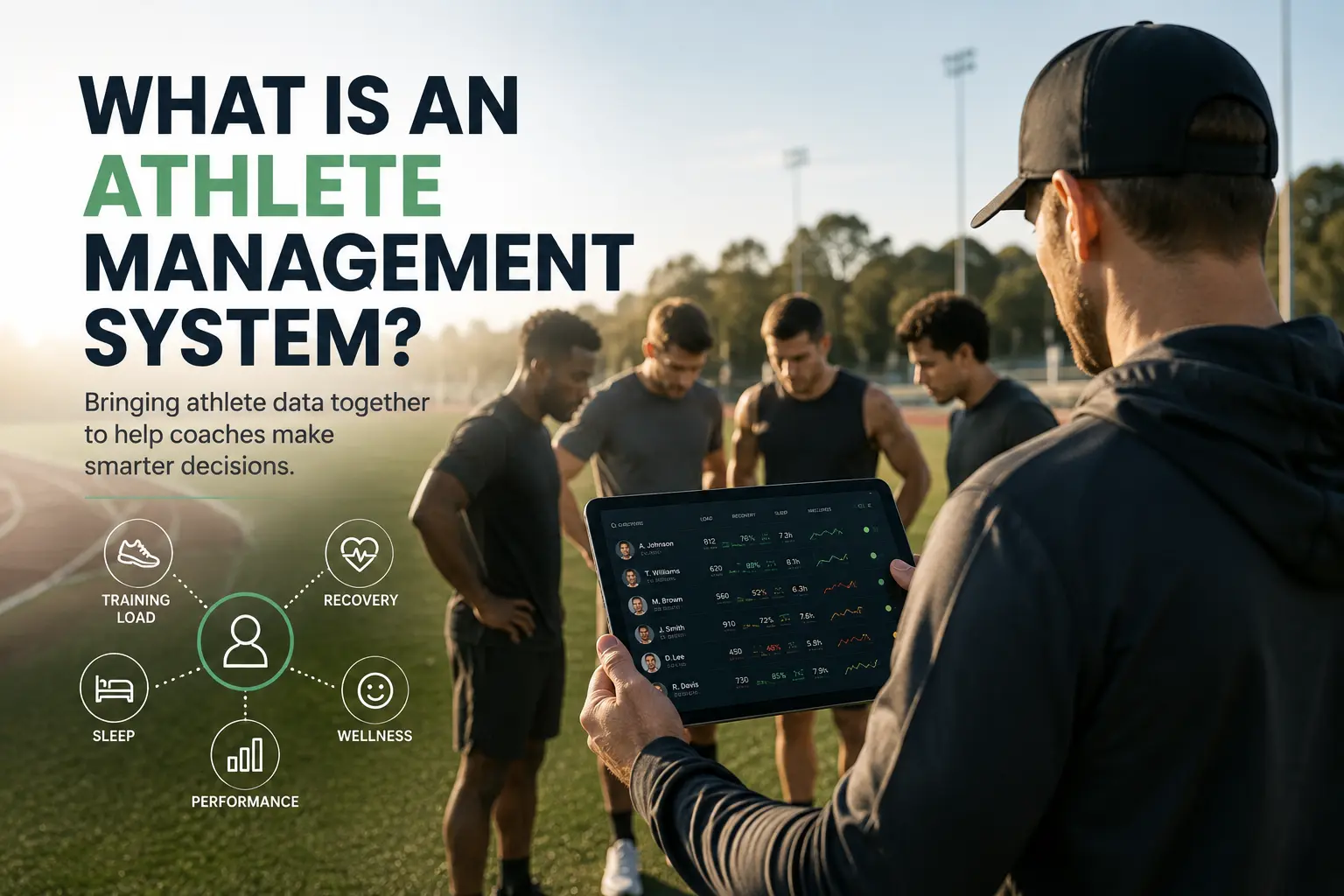
Reviewing these relationships is easier when workouts, wearable data and wellness feedback are organised together. An athlete management system can provide that shared view and help coaches see how each athlete is responding to training over time.
Use AI to investigate playing-group questions
AI can make sports science data easier to investigate. Instead of checking every athlete manually, staff can ask a detailed question across the playing group.
For example:
"Which athletes have had HRV remain more than 10% below their 28-day baseline for at least four of the past seven days, and which of those athletes also had lower sleep duration or higher training load?"
This is more useful than asking which athletes have the lowest HRV because absolute HRV differs substantially between people. A baseline-based question focuses on meaningful change within each athlete and looks for supporting context.
AI can also help coaches:
- Produce a morning brief showing the largest changes from individual baselines
- Compare how position groups responded to the same training week
- Identify missing or inconsistent data before a staff meeting
- Summarise the factors associated with a change in recovery
- Find athletes whose workload increased while sleep or wellness declined
Research on AI in sport has pointed to significant improvements in the accuracy of injury prediction and performance optimisation, though its value still depends on the quality of the underlying data. AI should show the evidence behind an answer so coaches can verify it.
Make sports science part of the weekly workflow
Sports science is most useful when it becomes part of the coaching routine rather than a separate reporting task. A simple workflow might include a short morning review followed by a more detailed weekly meeting.
The morning review can highlight meaningful changes that may affect the day's session, such as a decline in recovery or an unusual response to recent training. The weekly meeting gives coaches more time to examine longer trends, compare how athletes are responding and assess whether recent adjustments produced the intended result.
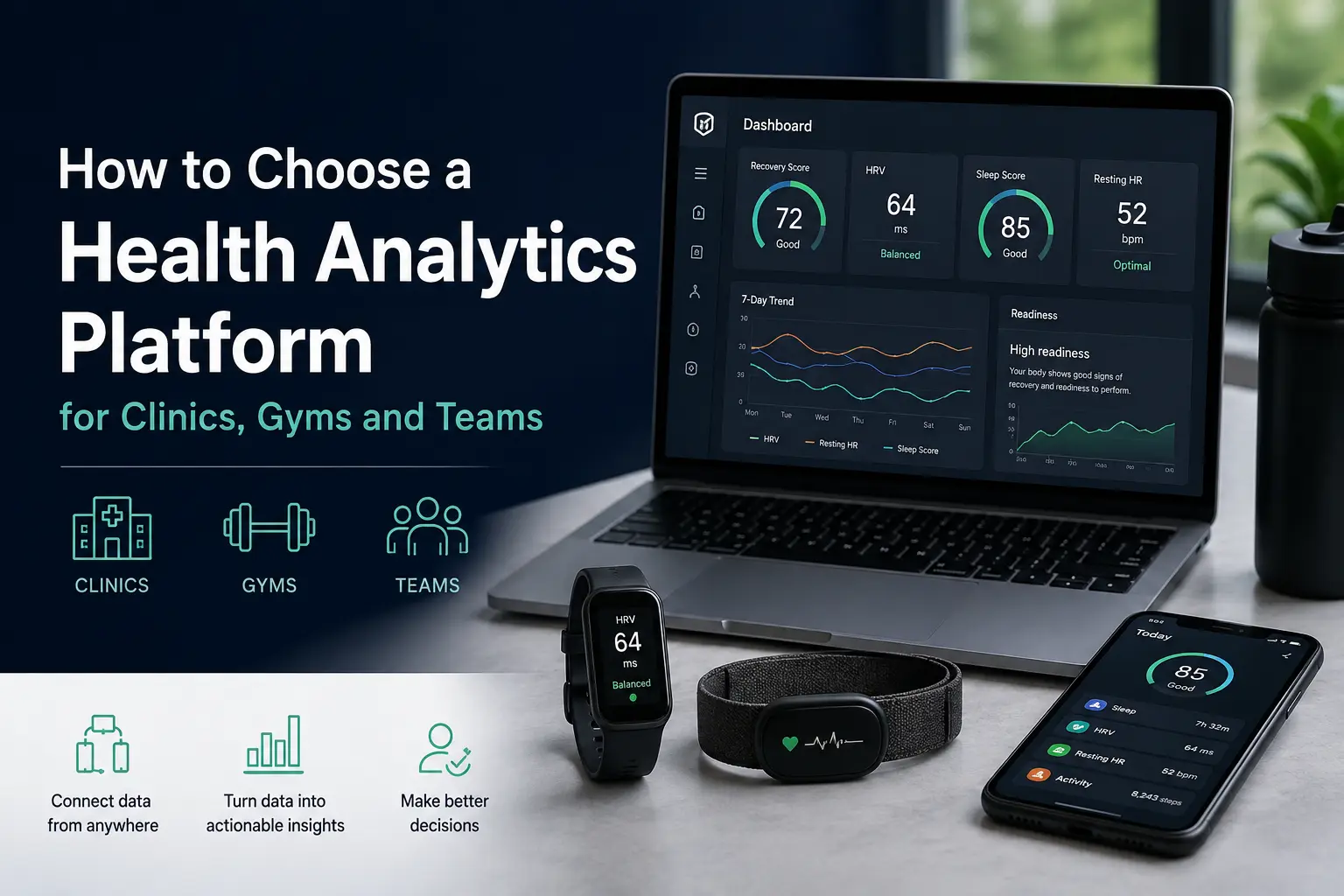
This process becomes harder when athletes use different wearables and their data is spread across several apps. Bringing those sources into a unified athlete data platform gives coaches a consistent place to review trends and ask questions across the playing group. The Australian Institute of Sport takes a similar centralised approach through an athlete management system that supports data-informed decisions across its sporting network.
The workflow should also be reviewed regularly. If a metric is collected but never influences a conversation or decision, it may not be worth tracking. Sports science should make the next coaching decision clearer, not make the dashboard more crowded.
Frequently Asked Questions (FAQ)
Which sports science metrics should a team track?
Start with metrics tied to a specific decision. Common options include training duration, distance, power, heart rate, session RPE, sleep, HRV and a short wellness survey. A smaller reliable dataset is usually more useful than many inconsistently collected metrics.
How is AI used in sports science?
AI can search data across the whole playing group, compare athletes with their baselines and summarise changes across several metrics. It can reduce manual analysis, but coaches should verify the underlying data before changing a training plan.
How can sports science help with recovery?
Sports science helps coaches evaluate recovery by comparing sleep, HRV, resting heart rate and subjective feedback with recent training load. These signals can help identify athletes who may benefit from further discussion or a training adjustment.
About Sonar
Your body is talking. Are you listening? Sonar unifies all of your wearables, lifestyle, and biomarker data to unlock personalised insights and detection once reserved for elite athletes and biohackers. Trusted by 250,000+ users across 170+ countries, Sonar helps you cut through the noise across sleep, recovery, stress, activity, and nutrition - so you can focus on what actually matters. Sonar isn't just another health tracker. Launched out of Columbia University in New York, it merges the latest medical, sports and data science with AI engines that continuously surface subtle shifts and patterns across millions of data points, helping you know when to push, when to pause, and where to focus next.
More to Explore
14 August 2026
12 August 2026
Get the latest from Sonar
Share your email to stay up-to-date with all things Sonar
- English (Australia)
- Bahasa Indonesia
- Bahasa Melayu
- Català
- Čeština
- Dansk
- Deutsch
- English
- English (Canada)
- English (UK)
- Español (España)
- Español (Latinoamérica)
- Español (México)
- Français
- Français (Canada)
- Hrvatski
- Italiano
- Magyar
- Nederlands
- Norsk
- Polski
- Português (Brasil)
- Português (Portugal)
- Română
- Slovenčina
- Slovenščina
- Suomi
- Svenska
- Tiếng Việt
- Türkçe
- Ελληνικά
- Русский
- Українська
- עברית
- العربية
- हिन्दी
- ไทย
- 한국어
- 日本語
- 简体中文
- 繁體中文
EN