
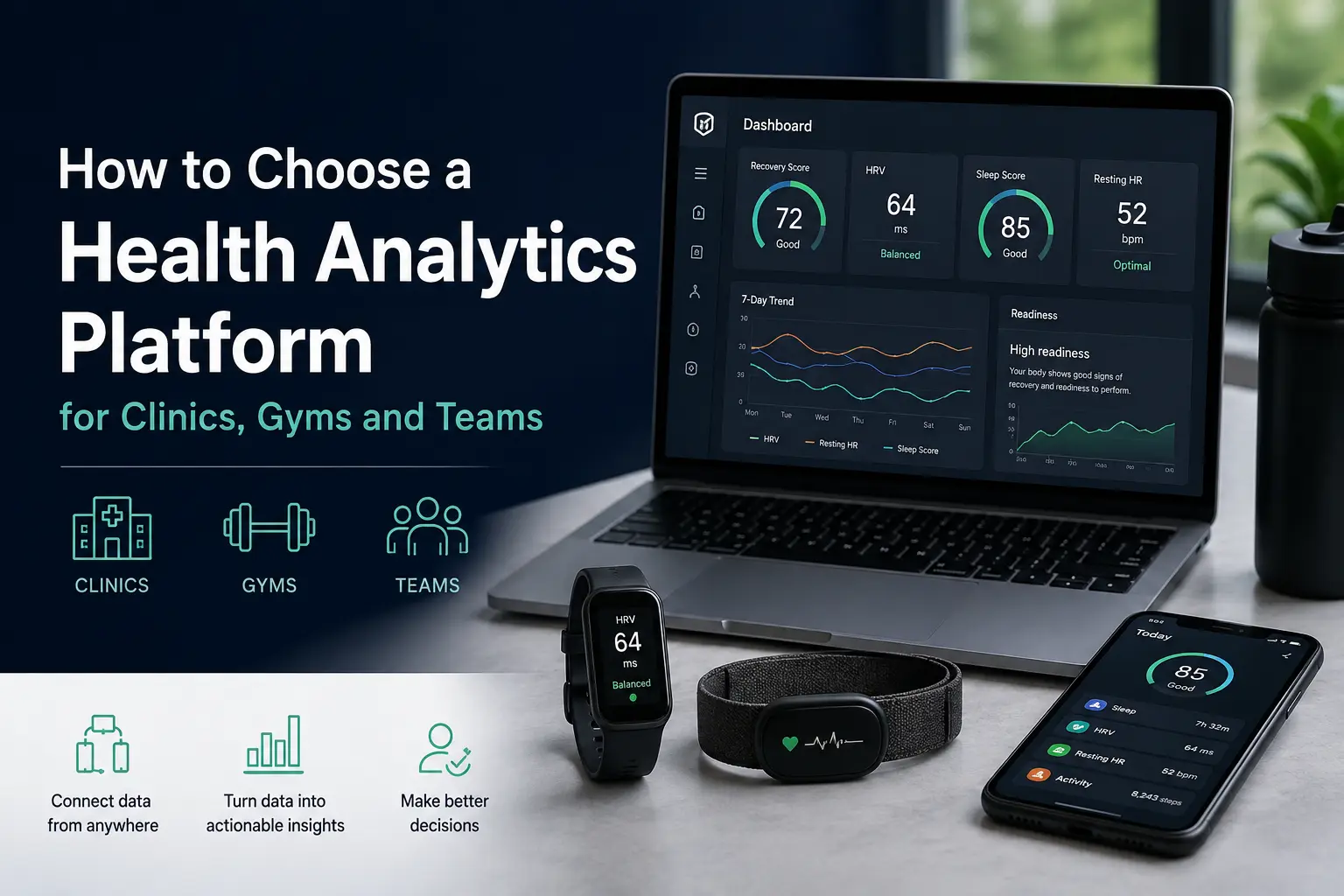
How to Choose a Health Analytics Platform for Clinics, Gyms and Teams
Quick summary
A health analytics platform combines data from apps, IoT devices and wearables in one place, then turns that data into insights a practitioner or coach can act on. In practice, this involves organising health data to help identify correlations and changes over time. Rather than simply displaying raw metrics, it adds a layer of context that helps teams better understand what the data may mean for each client or athlete.
For clinics, this often means structured reporting that fits into existing workflows. For gyms and studios, it means member-level insights that can improve coaching and support retention. For sports programs, it means monitoring recovery and workload without adding unnecessary complexity to a coach's day.
What health analytics actually covers
"Health analytics" gets used loosely, so it helps to separate two things: the data itself and what a platform does with it. Wearables and apps already produce data like sleep, heart rate and workouts on their own. Health analytics is the layer that combines this data across sources and turns it into something actionable. The end user is able to surface insightful trends that may have gone unnoticed to an untrained eye.
Now, if you're using a tool that just displays data synced to it, this is called a dashboard. A tool that flags a meaningful change in someone's resting heart rate or a member's declining heart rate variability is providing analytics.
What data health analytics platforms track
The specific metrics matter more than the device they come from. Most platforms draw from some combination of the following.
| Metric | What it captures | Why it matters |
|---|---|---|
| Heart rate variability (HRV) | Recovery and nervous system load | Flags overtraining or deviations from baseline |
| Sleep score, duration and stages | Time spent in deep, REM and light sleep | Connects poor sleep to next-day fatigue or performance. |
| Resting heart rate trends | Baseline cardiovascular shifts over time | Surfaces gradual changes that are easy to miss day to day. |
| Activity and training load | Steps, workouts and training intensity | Shows whether effort matches an individual's capacity or training goal. |
| Recovery or readiness scores | A blended signal, typically from sleep, HRV and strain | Helps decide whether to push or pull back on a given day. |
| Nutrition scores | Meal logs, macros and protein intake | Helps determine whether someone is maintaining optimal nourishment. |
No platform needs to track everything on this list well. What matters is picking the metrics that map to a real decision that you or someone on your team will actually make.
How health analytics differs by use case
The value of health analytics depends on who is using the data and what they are trying to improve for the person they serve.
Gyms and fitness studios
Health analytics can give trainers a better picture of what is happening outside the hour a member spends in a gym in addition to their workout performance.
Wearable data can add context around sleep, activity, heart rate and recovery. Instead of giving every member the same progression based only on what happened during the last session, a trainer can use longer-term trends to make the program more personalised to the individual.
For example, a trainer might use the data to:
- adjust workout intensity after several days of poor sleep or elevated resting heart rate
- recognise when a member is consistently exceeding or falling short of activity targets
- identify patterns between training consistency and improvements in health metrics
- compare performances between the different members you train
This is increasingly relevant as wearables become part of the normal fitness experience. The American College of Sports Medicine ranked wearable technology as the number one fitness trend for 2026 and estimates that roughly 36% to 44% of adults own wearable technology. ACSM also highlights data-driven technology as a way for exercise professionals to personalise training, assess readiness and help clients interpret the information their devices collect.
The goal is not to let a wearable make the training decision. It is to give the trainer another source of context they can combine with feedback and performance in the gym.
A more personalised experience can also support retention because members can see that the data they already collect is being used to make their coaching more relevant to them.
Coaching and player performance
For coaches or directors of player performance, health analytics can help answer a more specific question: How is this athlete responding to the work we are giving them?
Training volume alone does not provide enough of a picture. Two athletes can complete the same session and respond very differently. Combining workload data with recovery metrics, sleep and subjective feedback can give a coach more context before deciding whether to increase training, maintain or pull back.
Health analytics can also help coaches assess whether an athlete is likely to be ready for an upcoming game or competition. By looking at recent training load alongside sleep, resting heart rate, HRV, recovery trends and the athlete's normal baseline, coaches can get a more complete picture of how well the athlete is responding to training. That information can help inform adjustments before the event, such as reducing training volume, adding recovery time or changing the intensity of the final sessions.
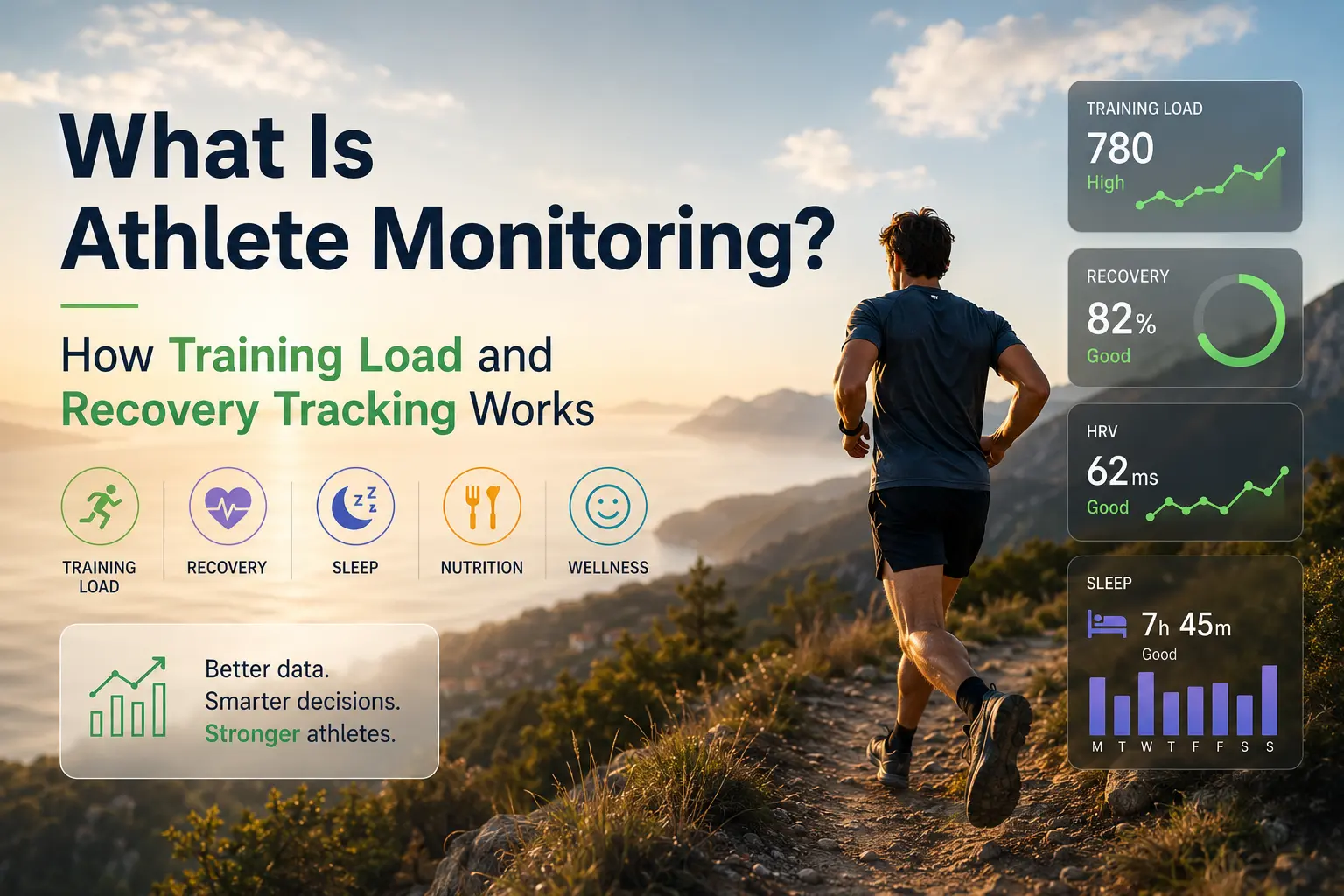
Athlete monitoring research supports using multiple measures together rather than relying on a single readiness score, since the goal is to understand the athlete's response to training and identify signs of accumulated fatigue that may affect performance.
In practice, a coach could use health analytics to:
- see how an athlete is responding to a new training regimen
- compare heart rate zones and cardio load metrics to previous sessions of the same workout
- recognise declining sleep or recovery alongside increasing workload
- understand which 5 players saw the steepest drop in stress in the past week
- compare an athlete against their own baseline instead of relying only on team averages
Longevity and health practices
For longevity and health practices, health analytics can help practitioners understand how a client is responding between appointments. Wearables and health apps can provide ongoing data on sleep, HRV, resting heart rate, activity, glucose, weight and other metrics that may provide useful context around a client's broader health plan.
This data can help practitioners:
- track changes after nutrition or lifestyle adjustments
- identify changes in sleep, recovery or metabolic metrics
- compare HRV against a client's personal baseline
- explore correlations between any two metrics like a client's stress and sleep
Rather than relying only on periodic check-ins, health analytics gives practitioners a longitudinal view of how key metrics are changing over time. It should still be used alongside appropriate clinical judgement, validated measurements and consideration of device accuracy and data quality.
What to look for
When comparing health analytics platforms, focus less on the number of features and more on whether the platform makes client data easier to utilise.
Integration depth
The platform should connect with the wearables and apps clients already use rather than forcing them into a new ecosystem. Broad data coverage is useful, but only if the information is standardised and easy to work with.
Actionable insights
More metrics do not automatically lead to better decisions. Look for trends, summaries or alerts that help staff understand what has changed without requiring them to perform exhausting manual analysis. Sonar Atlas, for example, brings health data from multiple sources into one platform and uses AI-powered analysis to help teams identify changes worth reviewing.
Data governance and privacy
Understand how data is stored, who can access it and what happens when a client leaves or disconnects a data source. These questions should be addressed before rollout rather than after a privacy or compliance concern comes up.
Easy implementation
Start with a smaller group before rolling a platform out across an entire client base. This makes it easier to identify integration issues, determine which metrics are actually useful and establish how staff will incorporate the data into their work.
Frequently Asked Questions (FAQ)
How much wearable data is actually useful for coaching or training decisions?
Less than most platforms display by default. Programs that get the most value tend to narrow in on a small set of metrics, often three to five, rather than trying to act on everything a device reports.
Can a small clinic or gym use a health analytics platform without a dedicated data or IT team?
Yes, as long as the platform is built to summarise and flag rather than just display raw numbers. Tools that require someone to manually interpret charts every day tend to get abandoned once the novelty wears off.
Can AI be used to analyse health data?
Yes. AI can help summarise trends, compare time periods and surface changes across large health datasets without requiring someone to review every metric manually. Consumer tools are moving in this direction too. For example, ChatGPT offers an Apple Health integration that allows users to understand changes in areas like sleep, activity and workouts.
About Sonar
Your body is talking. Are you listening? Sonar unifies all of your wearables, lifestyle, and biomarker data to unlock personalised insights and detection once reserved for elite athletes and biohackers. Trusted by 250,000+ users across 170+ countries, Sonar helps you cut through the noise across sleep, recovery, stress, activity, and nutrition - so you can focus on what actually matters. Sonar isn't just another health tracker. Launched out of Columbia University in New York, it merges the latest medical, sports and data science with AI engines that continuously surface subtle shifts and patterns across millions of data points, helping you know when to push, when to pause, and where to focus next.
More to Explore
Get the latest from Sonar
Share your email to stay up-to-date with all things Sonar
- English (Australia)
- Bahasa Indonesia
- Bahasa Melayu
- Català
- Čeština
- Dansk
- Deutsch
- English
- English (Canada)
- English (UK)
- Español (España)
- Español (Latinoamérica)
- Español (México)
- Français
- Français (Canada)
- Hrvatski
- Italiano
- Magyar
- Nederlands
- Norsk
- Polski
- Português (Brasil)
- Português (Portugal)
- Română
- Slovenčina
- Slovenščina
- Suomi
- Svenska
- Tiếng Việt
- Türkçe
- Ελληνικά
- Русский
- Українська
- עברית
- العربية
- हिन्दी
- ไทย
- 한국어
- 日本語
- 简体中文
- 繁體中文
EN