
What Is a Good Sleep Score? Average Ranges Explained
A good sleep score is generally considered 80 or higher on most wearable devices like an Apple Watch, Oura Ring or Garmin. Scores between 70–79 are usually considered fair, while scores below 60 may indicate poor sleep quality, elevated stress or insufficient recovery.
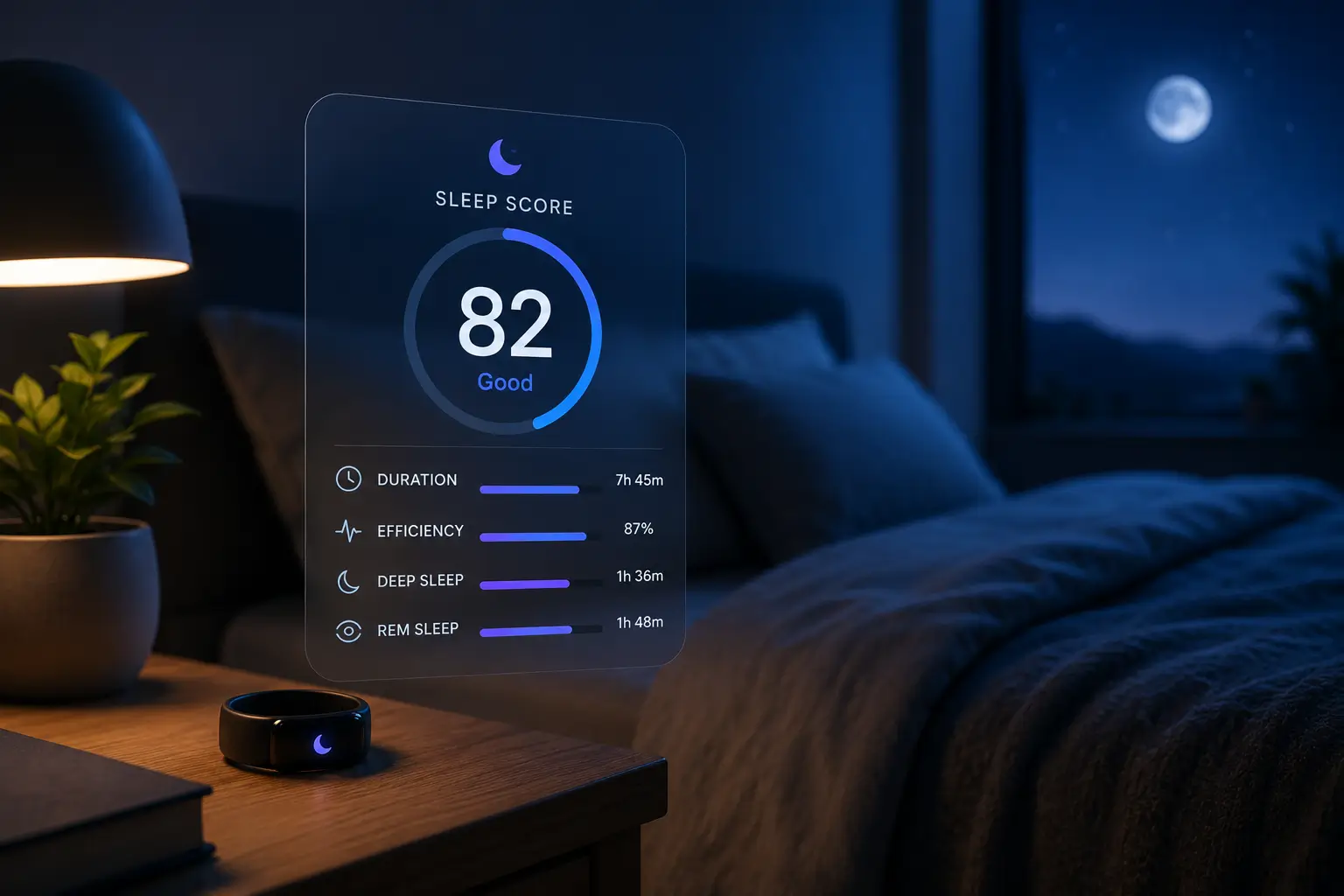
This guide breaks down sleep score benchmarks across major devices in 2026, what drives those numbers and how to use this data to actually feel more rested.
How Sleep Scores Work
A sleep score is a single numerical value, typically on a scale of 0 to 100, that summarises the quality of your night's rest. Instead of forcing you to interpret raw biological data, your device condenses multiple metrics into one "grade."
Most platforms calculate this score using a combination of:
- Duration: Did you meet your physiological sleep needs?
- Sleep Stages: The ratio of Light, Deep, and REM sleep.
- Sleep Efficiency: How much time in bed was spent actually sleeping vs. awake.
- Restorative Sleep: A combination of Deep Sleep and REM Sleep.
- Consistency: How closely your sleep/wake times align with your 14-day average.
What Is Considered a "Good" Sleep Score?
Most wearable users average a sleep score between 72 and 83 depending on age, stress, training load and sleep consistency. While formulas vary by brand, here is the standard breakdown for what constitutes a "good" score on the most popular wearables:
| Score Range | Rating | What It Means |
|---|---|---|
| 90–100 | Excellent | Peak recovery; optimal sleep architecture. |
| 80–89 | Good | Solid rest; most healthy adults should aim here. |
| 70–79 | Fair | Functional, but likely feeling some midday fatigue. |
| 60–69 | Poor | Significant sleep debt or high physiological stress. |
| Below 60 | Very Poor | Lifestyle or recovery habits may be severely affecting sleep quality. |
Device-Specific Benchmarks
- Fitbit: Considers 80+ to be "Good." Most users average between 72 and 83.
- Oura Ring: Defines 85+ as "Optimal" and 0–59 as "Pay Attention." It places heavy weight on your body temperature and HRV.
- Apple Watch & Apple Health: Apple provides a native Sleep Score. A score of 81–95 is considered "High," while 61–80 is classified as "OK." 96+ is "Very High" and 0–40 "Very Low."
- Samsung Galaxy Watch: Uses a 0–100 scale but is more rigorous; 80 or higher is excellent, though most adults average in the low 70s.
- Garmin: Scores of 80+ are the target, factoring in your body's battery and stress levels.
What Lowers Your Sleep Score?
You can spend nine hours in bed and still get a "Poor" score. This is usually due to poor sleep quality caused by:
- Alcohol: Even one drink may fragment REM sleep and keep your heart rate elevated.
- Late-Night Meals: Digestion raises your core body temperature, which delays the onset of Deep sleep.
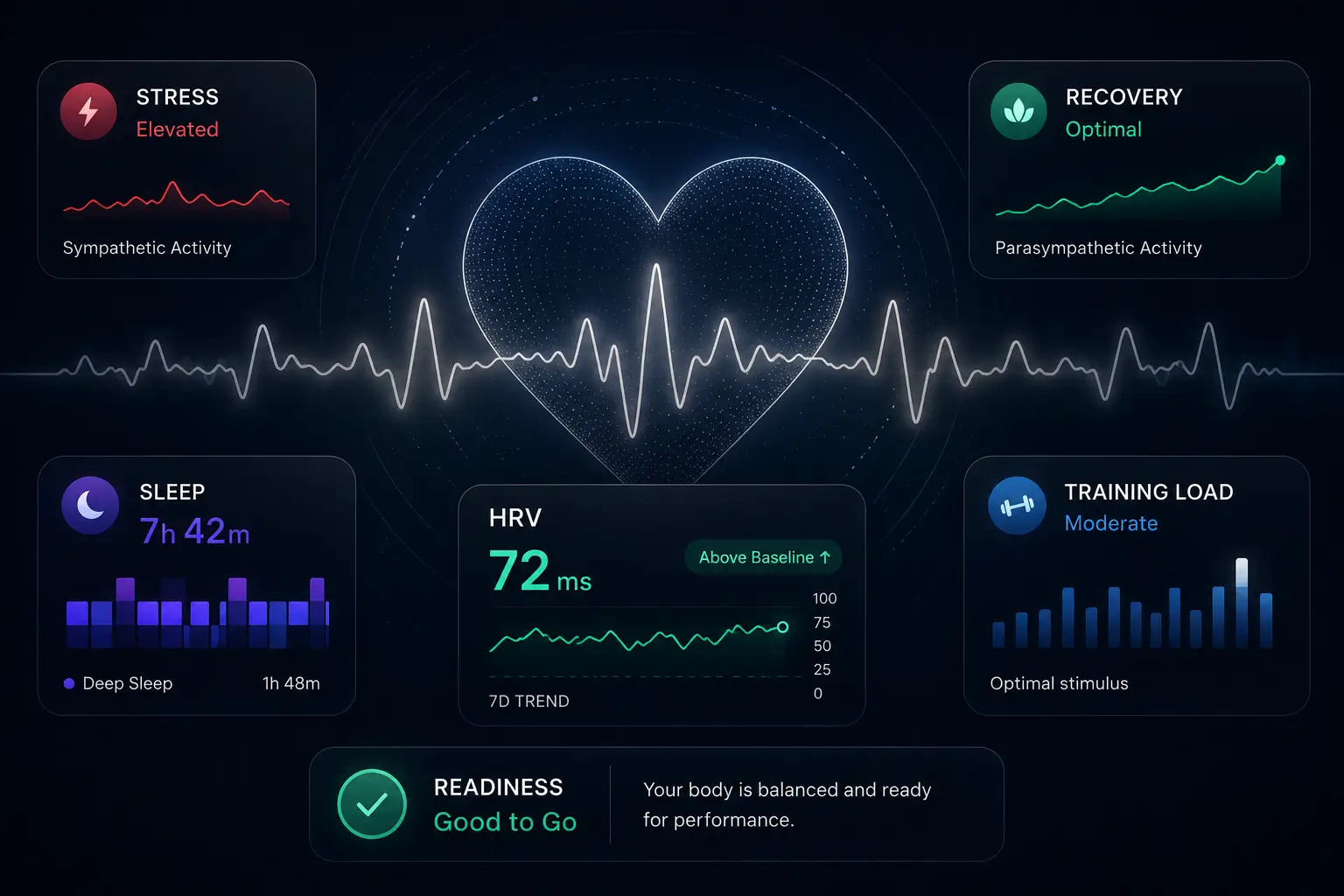
- High Cortisol: Stress keeps your nervous system in a "sympathetic" (fight or flight) state, lowering your HRV.
- Temperature: A room warmer than 65°F may contribute to restlessness and reduced restorative sleep. The Sleep Foundation recommends keeping bedroom temperatures between 65°F and 68°F for optimal sleep.
How to Improve Your Sleep Score
To move your score into the 80s or 90s, focus on these three high-leverage habits:
- Anchor Your Circadian Rhythm: Wake up at the same time every day, even on weekends. Your body's internal clock craves predictability.
- Morning Sunlight: View natural light within 30 minutes of waking. Morning sunlight helps regulate circadian rhythms and supports natural melatonin timing later in the evening.
- The 3-2-1 Rule: Finish eating 3 hours before bed, stop work 2 hours before bed, and turn off screens 1 hour before bed.
Beyond the Nightly Number
A sleep score is a useful snapshot, but it doesn't always explain why your recovery changes from night to night. Factors like stress, exercise timing, alcohol, caffeine and sleep consistency can all influence your results.
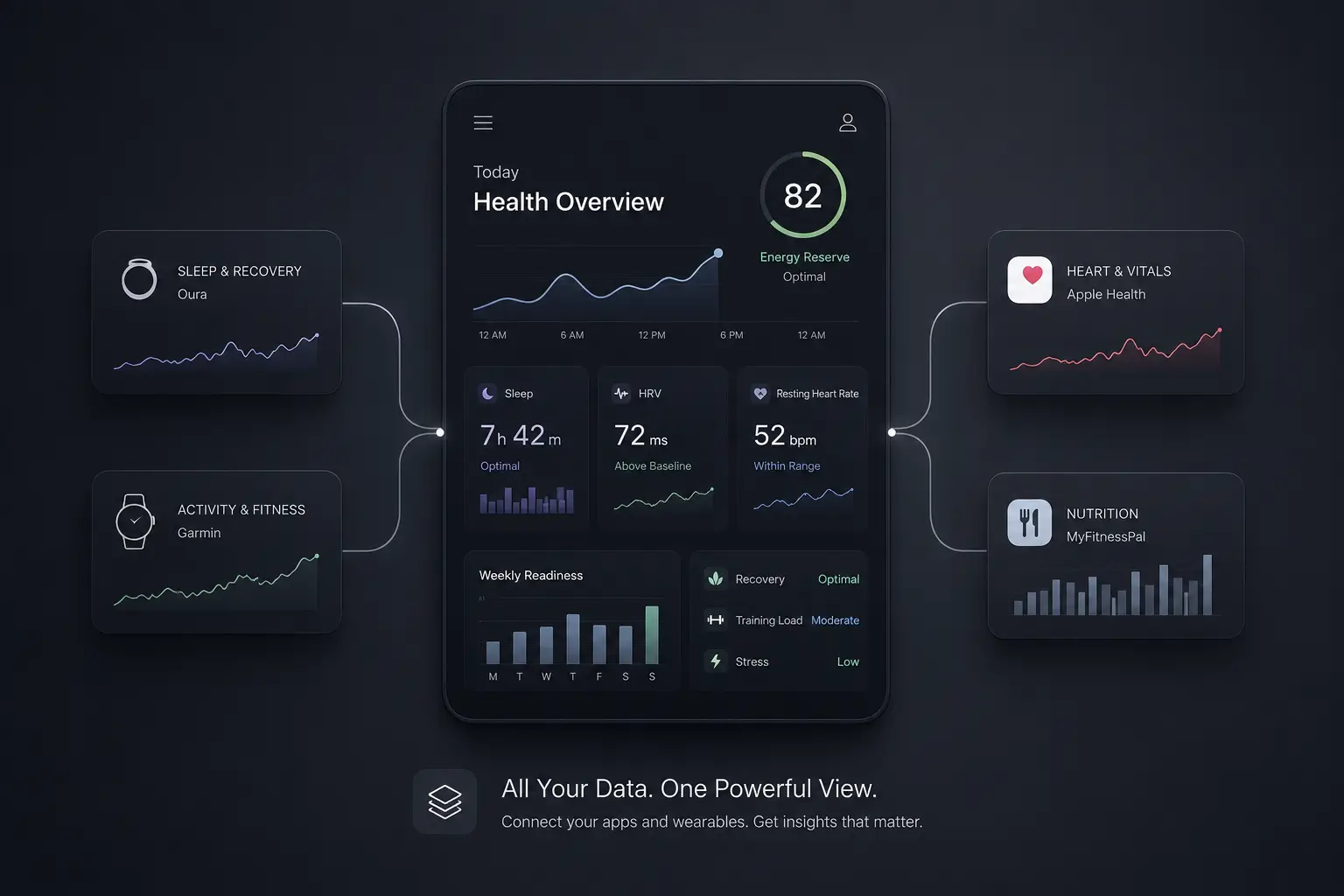
Apps like Sonar help connect your health and performance data in one place so you can spot correlations that may be affecting your sleep and recovery over time.
FAQ: Common Sleep Score Questions
Is a sleep score of 75 good?
A 75 is considered Fair. It means you are functioning, but there is clear room for improvement in either duration or sleep depth.
Why is my score low even when I sleep 8 hours?
Duration is only one piece of the puzzle. A low score despite long duration usually points to high heart rate or fragmentation (waking up multiple times), often caused by caffeine, alcohol or stress.
Can I trust my wearable's sleep data?
Wearable sleep trackers are generally more useful for tracking long-term trends than diagnosing medical sleep conditions. Use the score as a compass to see if your habits are trending in the right direction.
About Sonar
Your body is talking. Are you listening? Sonar unifies all of your wearables, lifestyle, and biomarker data to unlock personalised insights and detection once reserved for elite athletes and biohackers. Trusted by 250,000+ users across 170+ countries, Sonar helps you cut through the noise across sleep, recovery, stress, activity, and nutrition - so you can focus on what actually matters. Sonar isn't just another health tracker. Launched out of Columbia University in New York, it merges the latest medical, sports and data science with AI engines that continuously surface subtle shifts and patterns across millions of data points, helping you know when to push, when to pause, and where to focus next.
More to Explore
Get the latest from Sonar
Share your email to stay up-to-date with all things Sonar
- English (UK)
- Bahasa Indonesia
- Bahasa Melayu
- Català
- Čeština
- Dansk
- Deutsch
- English
- English (Australia)
- English (Canada)
- Español (España)
- Español (Latinoamérica)
- Español (México)
- Français
- Français (Canada)
- Hrvatski
- Italiano
- Magyar
- Nederlands
- Norsk
- Polski
- Português (Brasil)
- Português (Portugal)
- Română
- Slovenčina
- Slovenščina
- Suomi
- Svenska
- Tiếng Việt
- Türkçe
- Ελληνικά
- Русский
- Українська
- עברית
- العربية
- हिन्दी
- ไทย
- 한국어
- 日本語
- 简体中文
- 繁體中文
EN