
Strain Score: Tracking Your Body's Workload
What is Sonar’s Strain Score?
Strain quantifies the amount of cardiovascular load you’re putting on your body throughout the day. It’s a comprehensive measure designed to give you insight into how hard your body is working, so you can make informed decisions about your exercise routine and recovery. Strain consists of two key components:
- Active strain: The heart rate and movement associated with recorded workouts or physical activities.
- Passive strain: The background exertion from everyday tasks, motion, and stress that occurs outside of workouts.
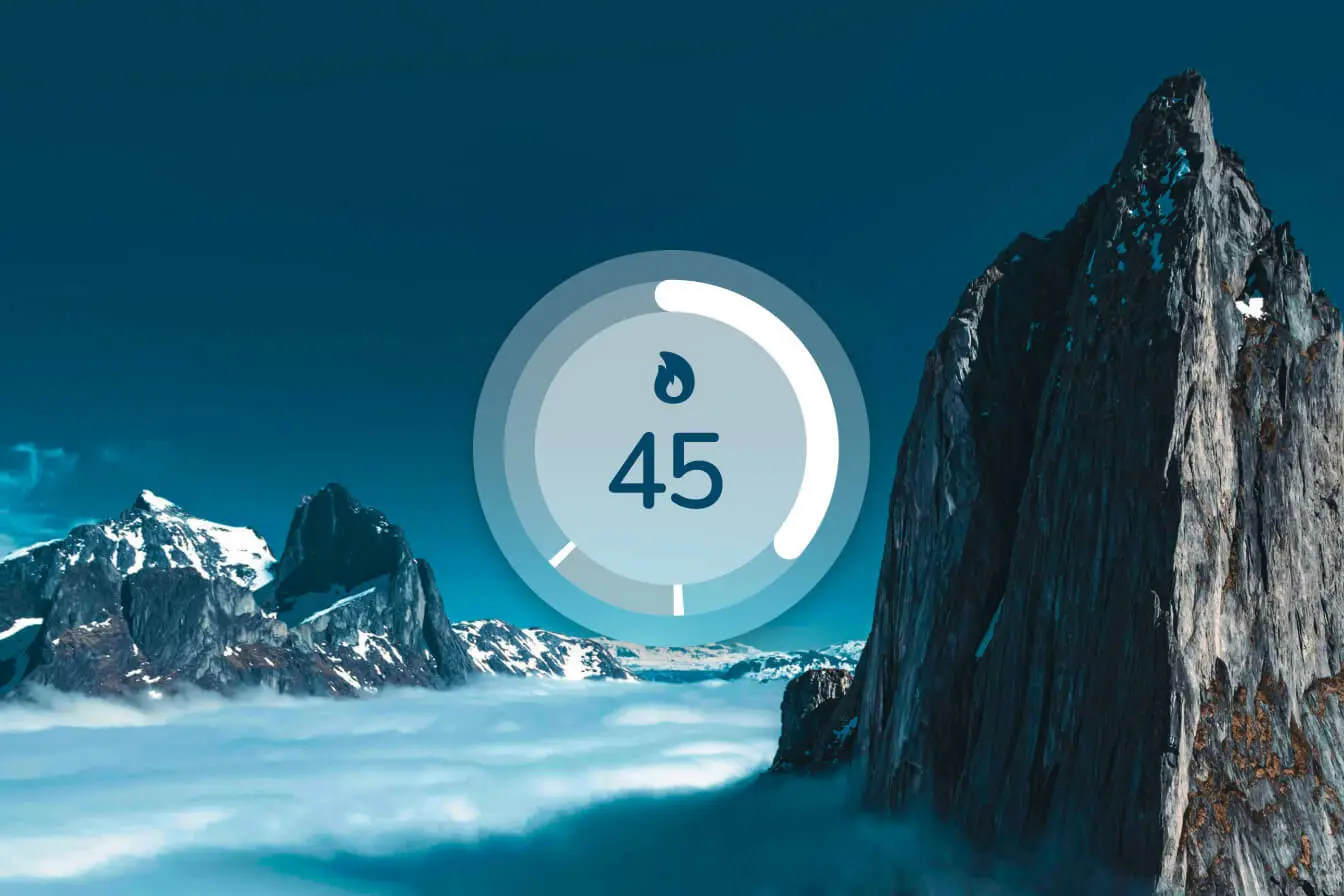
Sonar tracks your strain on a scale from 0–100%, offering a directional sense of your body’s workload as seen below. By providing strain scores for both individual activities and your overall day, Sonar helps you compare the intensity of your workouts and understand the broader impact of your lifestyle on your physical performance.
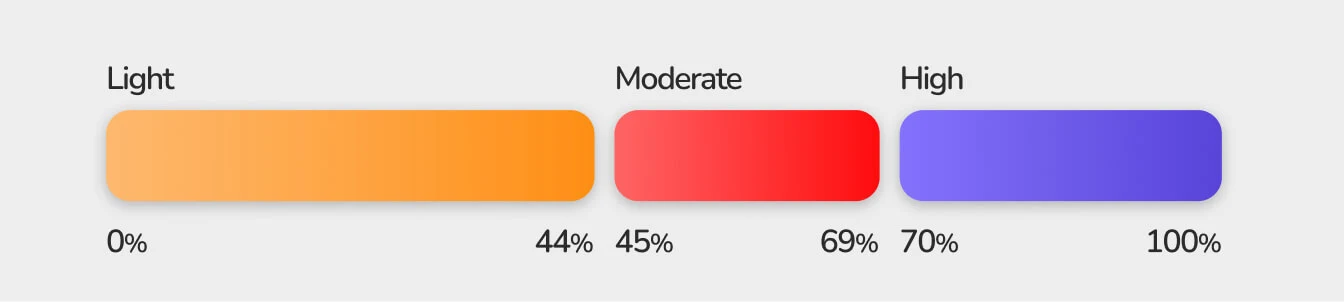
Light (0-44%): Minimal load put on the body, allowing you to recover while staying gently active.
Moderate (45-69%): A moderate load that’s great for maintaining fitness and making some limited fitness gains.
High (70-100%): Significant stress and activity that can lead to bigger fitness gains, but likely more difficult to recover from the next day.
How is Strain calculated?
Sonar calculates strain by analysing your cardiovascular load, primarily through heart rate data. The higher your heart rate and the longer it stays elevated, the more strain you accumulate. Strain builds logarithmically — meaning it’s much easier to increase your strain at lower levels, but it becomes progressively more challenging to add strain as your score gets higher. This reflects how your body works in reality: the closer you get to your limits, the harder it is to keep pushing further.
This logarithmic progression explains why adding up the individual strains from multiple workouts in a day doesn’t equate to your total day’s strain. For instance, running a marathon might raise your strain score to 95%, but running a second marathon would result in only a minimal increase to your day's overall strain. Achieving a 100% strain score would require operating at your maximum heart rate for 24 hours straight.
Importantly, strain isn’t limited to your workouts. Everyday stressors like a big presentation at work or a hectic day of commuting and running errands can all elevate your heart rate and build strain, even if you never set foot in the gym.
How Strain is personalised to you
Sonar’s strain algorithm adjusts to your personal baseline, which can be influenced by factors like your fitness level, diet, hydration, stress, illness, training load, and more. This is why two people completing the same workout might see vastly different strain scores. For example, a 90-minute hike that registers a 50% strain for a typical person might lead to only 30% for a highly conditioned athlete. As your personal fitness level improves, you will see the same workouts create less strain for yourself.
Strain is also responsive to how well recovered your body is each day. On days when your recovery is low — whether due to poor sleep, stress, or feeling unwell — you’ll notice strain accumulating more quickly than usual, even for familiar activities. This reflects the extra effort your body requires to maintain the same level of performance.
The relationship between Strain and Recovery
In simple terms, the higher your recovery is, the more strain your body is ready to take on. High recovery days are ideal for pushing your limits, while low recovery days may call for rest or light activity to avoid overtraining.
Sonar provides suggested strain targets based on your daily recovery level. Exceeding your recommended strain target can lead to fitness gains, but consistently overreaching without proper recovery may result in fatigue or setbacks. Monitoring the relationship between strain and recovery empowers you to train smarter, not harder.
Balancing data with self-awareness
While Sonar’s Strain Score is a powerful tool for understanding your daily activity, it’s just one piece of the puzzle. It’s not about achieving the highest score possible every day, but instead identifying opportunities for improvement. Listen to your body, trust your instincts, and balance the data with your own experience. By using the Strain Score as a guide, you can develop healthier habits and create a sustainable routine that supports both your short-term goals and long-term health.
About Sonar
Your body is talking. Are you listening? Sonar unifies all of your wearables, lifestyle, and biomarker data to unlock personalised insights and detection once reserved for elite athletes and biohackers. Trusted by 250,000+ users across 170+ countries, Sonar helps you cut through the noise across sleep, recovery, stress, activity, and nutrition - so you can focus on what actually matters. Sonar isn't just another health tracker. Launched out of Columbia University in New York, it merges the latest medical, sports and data science with AI engines that continuously surface subtle shifts and patterns across millions of data points, helping you know when to push, when to pause, and where to focus next.
More to Explore



Get the latest from Sonar
Share your email to stay up-to-date with all things Sonar
- English (UK)
- Bahasa Indonesia
- Bahasa Melayu
- Català
- Čeština
- Dansk
- Deutsch
- English
- English (Australia)
- English (Canada)
- Español (España)
- Español (Latinoamérica)
- Español (México)
- Français
- Français (Canada)
- Hrvatski
- Italiano
- Magyar
- Nederlands
- Norsk
- Polski
- Português (Brasil)
- Português (Portugal)
- Română
- Slovenčina
- Slovenščina
- Suomi
- Svenska
- Tiếng Việt
- Türkçe
- Ελληνικά
- Русский
- Українська
- עברית
- العربية
- हिन्दी
- ไทย
- 한국어
- 日本語
- 简体中文
- 繁體中文
EN