
Daily Habits for Raising Your Body's Battery
Your energy level isn’t fixed. It’s responsive, shaped by how you sleep, move, focus, and recover. When your Energy Reserve is full, you feel ready. When it’s low, even small tasks take more effort. The good news? Daily habits can raise your reserve, lower strain, and leave you feeling more balanced across the board.

Turn Metrics Into Action
Every morning, Sonar gives you a quick snapshot of how prepared your body is to meet the day. Whether you're planning a high output training session or just trying to stay focused through meetings and errands, understanding your physiological signals helps you make smarter decisions. Each metric offers a piece of the story:
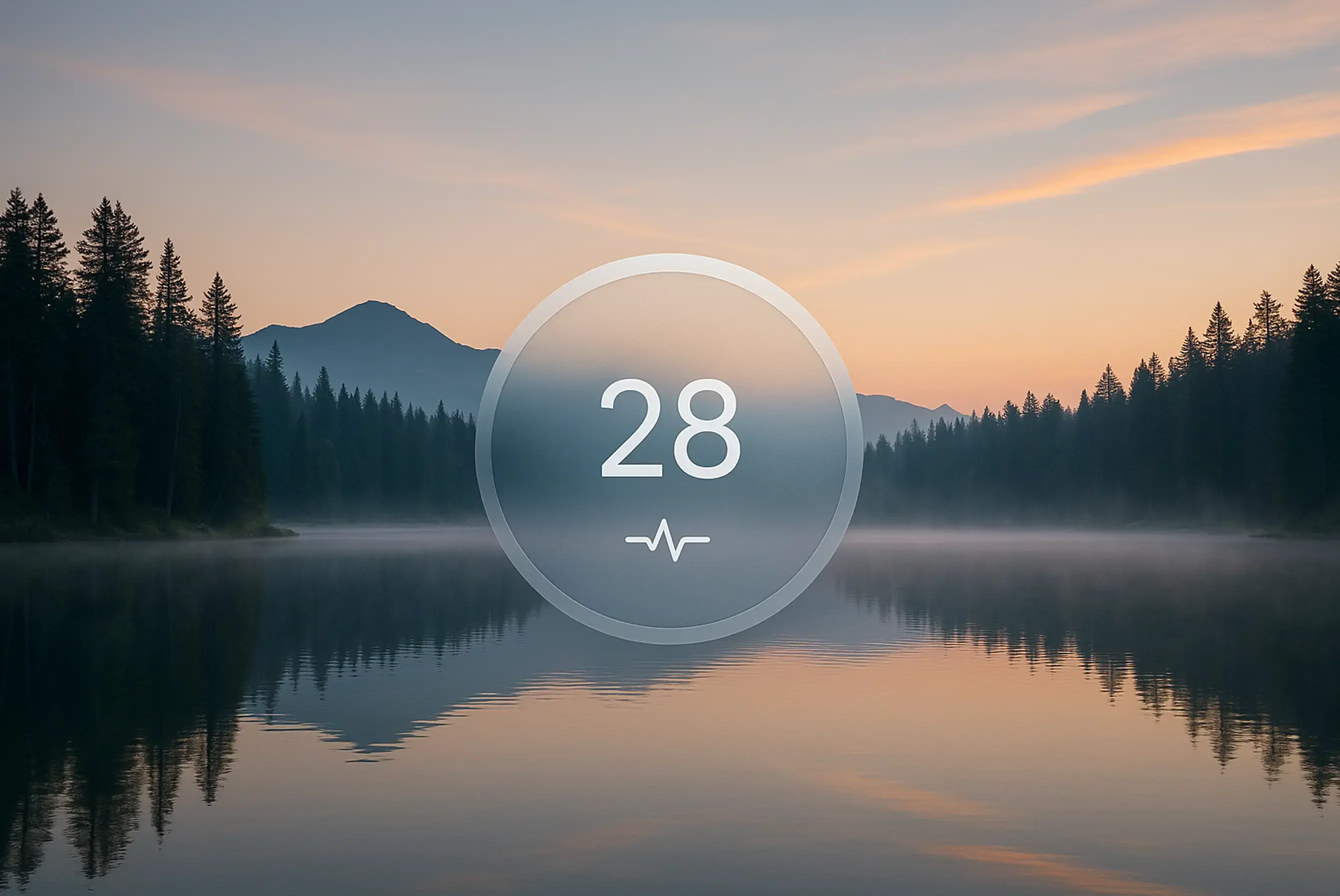
- Energy Reserve reflects your body's current battery level. If it’s running low, consider pulling back and prioritising recovery. If it’s well charged, you’ve got room to push — whether that means focused work, training, or simply showing up with more presence.
- Stress Score captures how activated your nervous system is. Elevated stress doesn’t always feel dramatic, but it does deplete your Energy Reserve faster.
- Recovery shows how restored your system is from the night before. If your recovery is low, even routine tasks or light workouts can feel unusually taxing.
- Sleep is your main recharger. Even one poor night can leave you feeling flat, no matter how light your schedule is.
The key isn’t reacting to numbers in isolation. It’s spotting patterns. If your Energy Reserve is dropping fast by midmorning, you might be underslept, overcaffeinated, or overloaded cognitively. That’s a signal to shift gears, not power through.
Build a Resilient Daily Rhythm
Raising your body's battery isn’t about big swings. It’s about how you stack and sequence small actions that support your system physically and neurologically.
Start strong. Within 30 minutes of waking, get natural light and a few minutes of movement. Even a short walk or light mobility session is enough. Hydrate early, eat a protein-forward breakfast, and delay caffeine 60 to 90 minutes to smooth your energy curve. Before your first meeting or email, try two minutes of nasal breathing to keep your system grounded.
Protect the midday zone. Late morning to midafternoon is when your body tends to be most alert and capable. Use this window to your advantage. Work in 50-minute blocks, with 5-minute off-screen resets. After lunch, a slow 10 to 20 minute walk helps stabilise HRV and avoid the 3 p.m. slump. Keep your meals balanced and predictable. Spiking blood sugar will spike stress too.
End the day with intention. An hour before bed, begin to downshift. Power down screens, dim the lights, and move into quiet, low-stimulation activity like light stretching, a warm shower, journaling, or reading. Skip alcohol, and keep caffeine to the first half of the day. Prioritise consistency in your sleep and wake times. That matters more than duration alone.
Micro Habits That Refill Your Tank
Some of the most effective interventions take under five minutes. And they work best when they’re used early, before stress accumulates.
- Slow nasal breathing (such as 4-4-6 cadence) resets your autonomic balance.
- A minute of horizon gazing reduces visual and cognitive load.
- A cool water face splash can gently shift your state without overstimulation.
- A 10 to 20 minute micro nap (before 3 p.m.) can refill depleted reserves.
- Outdoor light exposure, even for 2 to 3 minutes, boosts circadian alignment.
- Short journaling or gratitude prompts help shift out of mental overdrive.
These aren’t productivity hacks — they’re physiological resets. And done consistently, they add up to a routine that supports more output with less strain.
Move to Recover, Not Just Train
The right kind of movement can help stabilise energy and support recovery. The goal is to create a net gain in stability and energy. When stress is high or recovery is low, shift toward calming movement like:
- Low intensity steady state cardio at a conversational pace
- Mobility sessions paired with slow, nasal breathing
- Gentle yoga focused on long exhales and downregulation
When your Energy Reserve is higher and recovery is solid, you can layer in intensity, ideally earlier in the day when your body is best equipped to handle load. What matters most is what follows: hydrate, fuel, and downshift to support recovery.
Focus Is a Physiological Skill
Cognitive overload is one of the fastest ways to drain your Energy Reserve. To protect energy and reduce background stress, simplify your mental environment:
- Work on one task at a time. Close extra tabs.
- Batch reactive work like email or chat into fixed windows.
- Protect at least one deep work block per day from meetings or interruptions.
- Sit with grounded posture, feet on the floor, screen at eye level.
Reducing friction in your environment makes focus easier and gives your nervous system less to manage.
Fuel Like You Mean It
Your brain and body run best on steady, predictable energy, not chaos, spikes, or last-minute crashes. When you fuel consistently and avoid big swings, your system becomes more stable, more focused, and more resilient.
- Front load your day with 25 to 40 grams of protein at breakfast and lunch.
- Choose steady, complex carbs, especially if training.
- Stay hydrated with steady, small sips instead of big gaps.
- Keep dinners earlier and lighter to support sleep depth.
Nutrition isn’t about perfection. It’s about giving your system what it needs to stay stable under load.
Know When to Pivot
Even when your habits are strong and consistent, not every day will go according to plan. Some mornings you’ll feel flat for no obvious reason, or notice your Energy Reserve dropping faster than expected. That’s where your data becomes useful — not just for tracking, but for adjusting in real time:
- If you feel tired despite a light day, look at whether you had caffeine too late in the day, drank alcohol in the evening, or went to bed outside your usual sleep window.
- If your Energy Reserve is low but stress is normal, underfuelling or illness may be in play.
- If stress is high even with a high Energy Reserve, you can still perform, but protect the afternoon with micro recovery.
- If evenings feel wired, pull caffeine earlier and lengthen your wind down routine.
Your metrics are dynamic because your physiology adapts, and that’s what makes them so useful for adjusting in real time.
Closing Thoughts
Resilience isn’t luck. It’s built. It’s what happens when you create just enough space in your day for the nervous system to reset, for sleep to do its job, and for stress to release rather than accumulate.
Your Energy Reserve provides real-time insight into how you're managing sleep, stress, recovery, and effort. Use it to shape a day that leaves you feeling clearer, more balanced, and better equipped to grow.
About Sonar
Your body is talking. Are you listening? Sonar unifies all of your wearables, lifestyle, and biomarker data to unlock personalised insights and detection once reserved for elite athletes and biohackers. Trusted by 250,000+ users across 170+ countries, Sonar helps you cut through the noise across sleep, recovery, stress, activity, and nutrition - so you can focus on what actually matters. Sonar isn't just another health tracker. Launched out of Columbia University in New York, it merges the latest medical, sports and data science with AI engines that continuously surface subtle shifts and patterns across millions of data points, helping you know when to push, when to pause, and where to focus next.
More to Explore


Get the latest from Sonar
Share your email to stay up-to-date with all things Sonar
- English (Australia)
- Bahasa Indonesia
- Bahasa Melayu
- Català
- Čeština
- Dansk
- Deutsch
- English
- English (Canada)
- English (UK)
- Español (España)
- Español (Latinoamérica)
- Español (México)
- Français
- Français (Canada)
- Hrvatski
- Italiano
- Magyar
- Nederlands
- Norsk
- Polski
- Português (Brasil)
- Português (Portugal)
- Română
- Slovenčina
- Slovenščina
- Suomi
- Svenska
- Tiếng Việt
- Türkçe
- Ελληνικά
- Русский
- Українська
- עברית
- العربية
- हिन्दी
- ไทย
- 한국어
- 日本語
- 简体中文
- 繁體中文
EN